Mpumalanga Community Safety opens 2026 traffic officer learnership for matriculants
How provincial traffic training works at college level, what recruiters test for during screening, and how to apply with only Grade 12 and a driving licence.

Why this is a realistic first job
Most public sector vacancies demand three to five years of verified work experience. That requirement shuts out thousands of young South Africans every month. A traffic officer learnership operates on a different model. It is designed to recruit people who have the foundational tools, specifically a matric certificate and a driving licence, and build their professional capability from the ground up.
In provincial traffic management, departments do not expect you to arrive with knowledge of vehicle fitness regulations, roadblock procedures, or court docket administration. The state runs dedicated institutions, such as the Mpumalanga Traffic Training College in Mkhuhlu, specifically to teach those disciplines. The Department of Community Safety, Security and Liaison covers the training costs while providing an entry stipend of R5,000 per month so candidates can support themselves during the 12-month qualification.
For an applicant living in Bushbuckridge, Mbombela, or anywhere else in Mpumalanga with no prior office experience, this creates a level playing field. The recruitment team does not measure you against experienced corporate workers. Instead, they look at your basic eligibility, your physical health, your driving ability, and your track record as a law-abiding citizen.
What you will learn in the first months
Life inside a traffic training college is structured and demanding. It feels closer to an academy than a traditional university campus. The opening phase focuses heavily on physical conditioning, discipline, and legal theory.
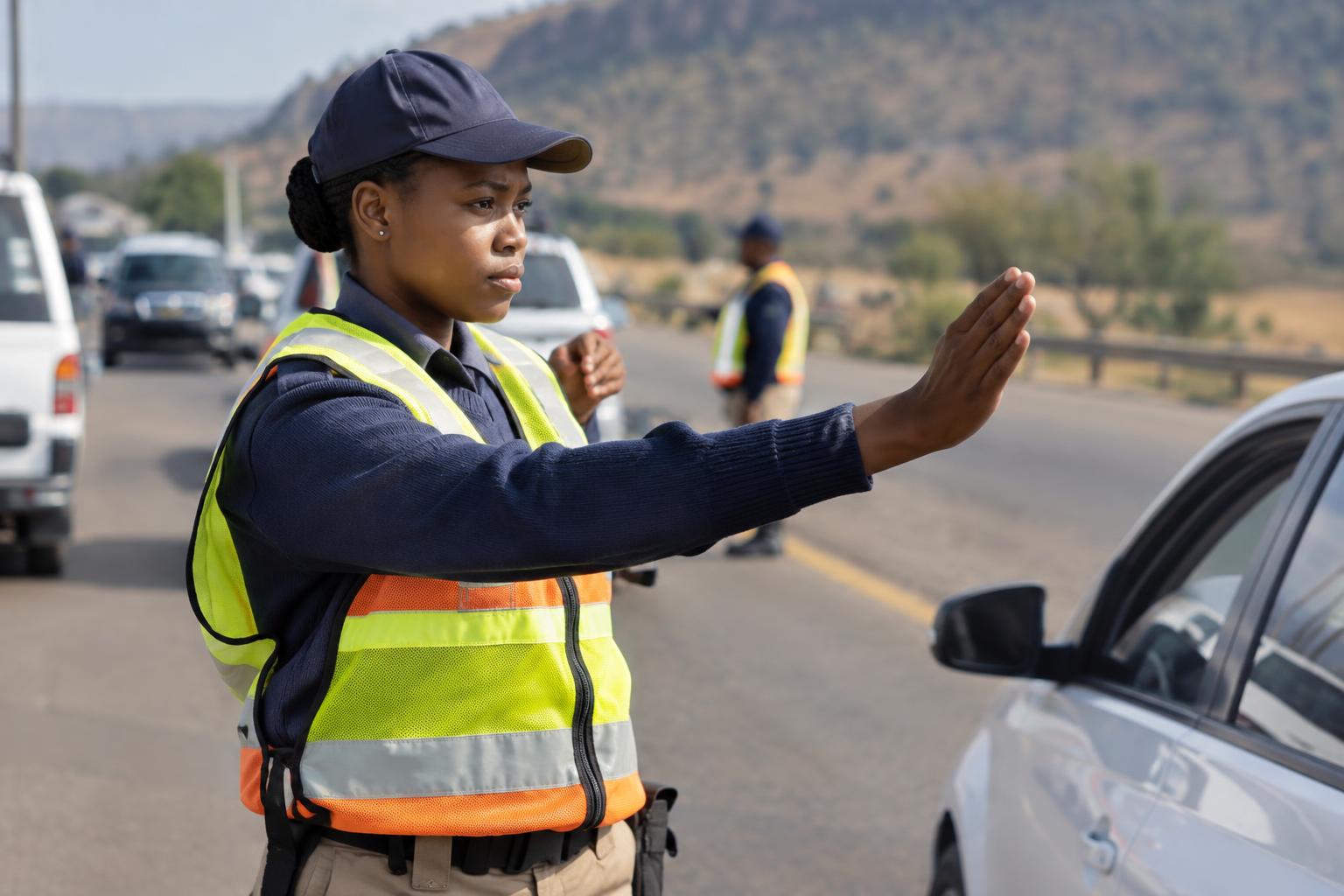
Recruits spend early mornings on physical training and parade ground drill work. This is not arbitrary punishment. Law enforcement officers must maintain physical stamina to manage traffic on foot for hours in extreme heat, run after suspects if necessary, and handle high-stress confrontations calmly. Drill work teaches teamwork, obedience to command structures, and attention to personal presentation.
Alongside the physical regimen, you spend long hours in lecture halls covering South African law. Key focus areas include:
- The National Road Traffic Act and related road transport regulations, including vehicle categories, driver fitness, and speed limits.
- The Criminal Procedure Act, which governs how peace officers stop motorists, issue notices, make arrests, secure evidence, and preserve accident scenes.
- Practical roadside vehicle inspection techniques to identify unroadworthy tyres, braking defects, overloaded freight, and fraudulent licence discs.
- Road traffic control, emergency scene management, and manual point duty during power outages or multi-vehicle collisions.
- Professional ethics and conflict de-escalation, preparing you to handle hostile drivers without compromising safety or integrity.
Once the theoretical grounding is complete, trainees spend time in monitored operational deployments on provincial roads alongside experienced mentors. You learn how to speak to motorists professionally, verify driving credentials, and complete Section 56 and Section 341 notices accurately so they hold up in a magistrate's court.
Applying with little or no experience
When you have never held a formal job, completing an application form can feel intimidating. The standard provincial recruitment process relies on the new Z83 application form and a clean curriculum vitae. Many applicants make the mistake of leaving sections blank or inventing casual jobs to make their CV look fuller. That is a mistake.
Selection panels reviewing learnership applications look for compliance, accuracy, and truthfulness. On the Z83, fill in every required field clearly, citing the exact reference number and post details. An incomplete or unsigned Z83 is routinely rejected during initial administrative screening before anyone reads your CV.
Because you do not have former managers to list, choose referees who can speak to your reliability and character. Consider the following options:
- Your high school principal or a senior teacher who taught you in Grade 12.
- A community sports coach or youth organisation leader who knows your discipline and attendance.
- A local community leader, pastor, or volunteer supervisor who can confirm your honesty and community standing.
Ensure your contact numbers and your referees' numbers are active and reachable. Government human resource units will not spend days tracking down an applicant whose phone rings unanswered.
Prepare yourself physically well before invitation dates. Candidates who pass paper screening are called for fitness assessments, medical examinations, and in-person driving evaluations. If you have not driven since passing your driving test, practice standard vehicle handling, parking, and observation routines now. You will be tested behind the wheel to confirm you can operate a vehicle safely.
Turning it into a career, not just an income
Completing the 12-month programme leads to a Basic Traffic Officers Diploma registered at NQF Level 4. That qualification is recognised across the country, turning you from an untrained job seeker into a qualified traffic officer.
While provincial departments do not automatically guarantee permanent absorption after training, qualified officers with an NQF Level 4 diploma are in a prime position. Provincial departments, local municipal traffic departments, and metro police services across South Africa recruit directly from the pool of certified officers.
Over the course of three to five years, a career in traffic enforcement can diversify in several directions:
- Specialised accident investigation and reconstruction, working alongside court prosecutors.
- Heavy motor vehicle inspection, operating provincial weighbridges to control overloading and freight transport standards.
- VIP escorts, high-speed tactical response, and public order support units.
- Supervisory roles, moving up from provincial inspector grades to station commanders, regional directors, or road safety education officers.
The monthly stipend helps you survive the training year, but the real return is the credential. It gives you an accredited, enforceable professional trade that can support you throughout your working life.
Apply for this job
Traffic Officer Learnership 2026/2027 at The Department of Community Safety, Security and Liaison · Mpumalanga
View the listing and applyRead next
- Department of Water and Sanitation Mmabatho Vacancy: Admin Clerk Post for Grade 12 CandidatesWhat the administrative clerk vacancy at the Department of Water and Sanitation in Mmabatho involves, how to approach the Z83 with only matric, and how entry-level public service posts work.
- Northern Cape Department of Health opens Nursing Assistant vacancy in Kakamas for 2026Grade 1 nursing auxiliary posts require SANC registration but zero prior formal work experience. Here is how to build your application and start your ward career.
- Gauteng Health hiring Social Auxiliary Workers in Soweto at R209 865 per yearThe Gauteng Department of Health has opened applications for two permanent Social Auxiliary Worker posts in Soweto. Here is what the selection panel will look for and how hospital social support work actually functions.
- Limpopo Social Development is hiring a Child and Youth Care Worker in Thohoyandou for 2026A realistic look at shift work, SACSSP compliance, and daily routines inside a secure care centre before you submit your application.