Glencore Coal SA opens mining engineering bursaries for 2027 studies in Emalahleni
Securing a mining engineering bursary covers study costs, but staying the course depends on handling tough practical shifts on the Mpumalanga coalfields. Here is what the work demands.

Key facts before you apply
- Closing date: 30 October 2026 (reference GTC 2027/003)
- Field: Mining Engineering only
- Who can apply: matriculants going into first year, and current first- or second-year university students with a 60% or higher average
- Preference: applicants from communities near Glencore Coal operations in South Africa
- Not eligible: students already funded by another organisation or company
- Covers: tuition, meals and accommodation, prescribed textbooks, compulsory excursions, a travel allowance and a personal allowance
What the day-to-day work actually looks like
While a bursary covers your academic fees, text books, and accommodation during the university semester, your actual training takes place on site during vacation work. For a mining engineering bursar at a coal operation around Emalahleni, site exposure is mandatory. An ordinary day during practical training does not start in a lecture hall. It starts before dawn at the colliery gate.
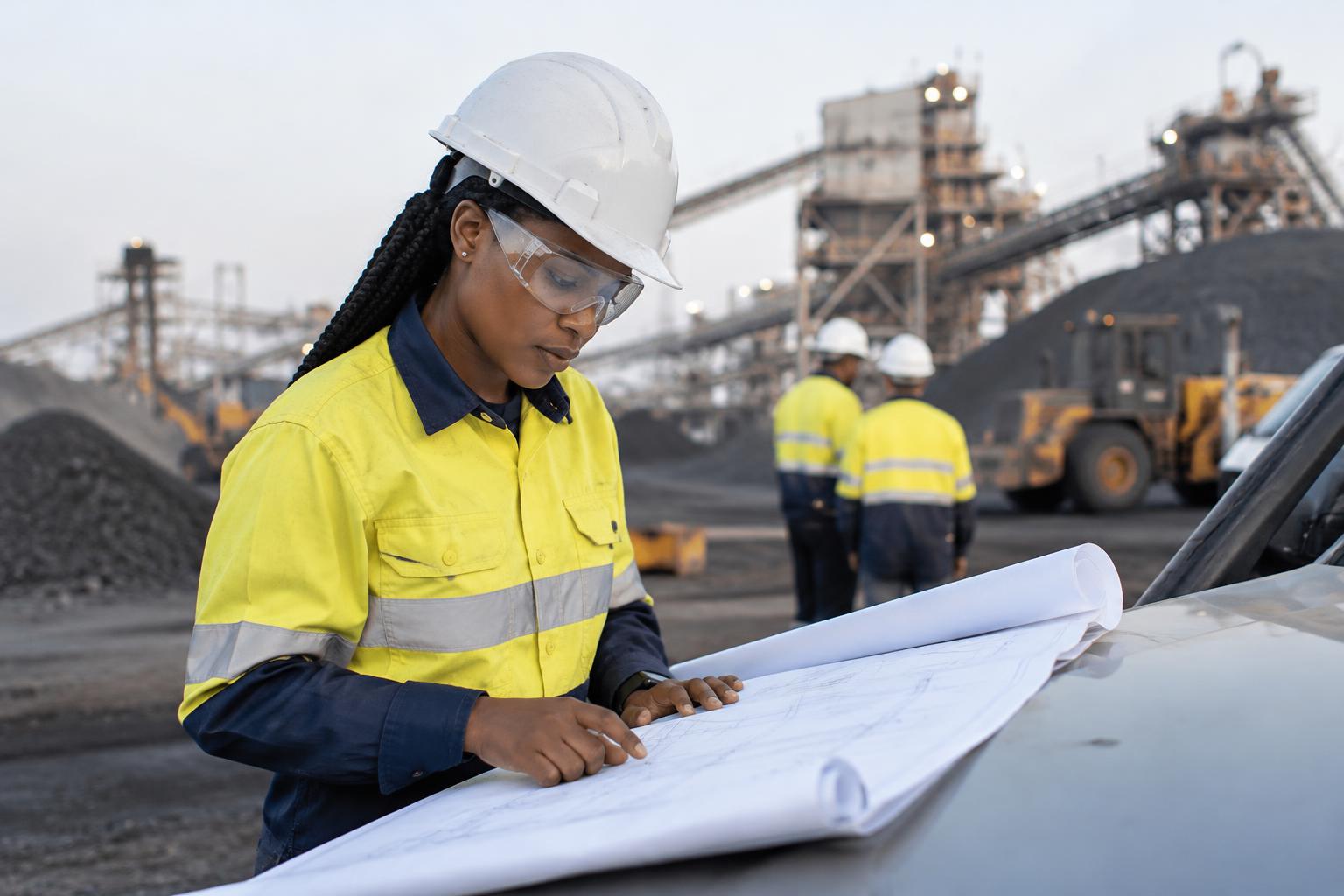
By 05:30, you are in the change house putting on full personal protective equipment: high-visibility reflective overalls, safety boots with steel toe caps and metatarsal guards, a hard hat, ear defenders, safety glasses, and a heavy leather belt carrying a battery pack and a self-contained self-rescuer unit. If you are reporting to an underground section, you collect your lamp and tag brass tokens onto the tally board at the lamp room so safety controllers know exactly who is below surface.
At 06:00, you attend the shift handover meeting. Section miners, shift bosses, and engineers review the previous shift's coal extraction volumes, machine breakdowns, gas monitoring levels, and roof conditions. If methane levels spike or water ingress blocks a haulage route, plans change on the spot.
By 07:00, you are heading down via a decline or transport vehicle into the working sections, or walking out to the pit face in an open-cast environment. In underground continuous miner sections, the noise is constant. You will observe how the cutting drum extracts coal from the seam, watch the roof-bolter crew install resin anchors to secure the hanging wall, and take air velocity readings using an anemometer to ensure ventilation doors are routing fresh air properly.
Between 10:30 and 13:00, practical assignments keep you busy. You might shadow a production supervisor to time haulage trucks, inspect conveyor belts for tear risks, or take measurements for an engineering logbook entry on dust suppression systems. The air underground smells of damp stone and pulverized coal. In an open-cast pit, Mpumalanga dust coats your face and boots within two hours.
By 13:30, you head back to surface to wash the coal dust off your face, return safety gear, and report to the engineering offices. From 14:00 to 15:30, you sit down with a mentor or senior production engineer to review raw production figures, input data into spreadsheets, and complete sign-offs for your university practical modules before clocking out for the afternoon.
Who tends to do well in this role
Mining engineering attracts people who want high technical challenge alongside heavy outdoor physical reality. If you want a purely clean office job with air conditioning and quiet corridors, mining engineering will frustrate you very quickly.
Those who succeed usually share specific habits:
- Comfort with heavy physical environments: You must be able to walk long distances over uneven floor rock, navigate dark, low-seam underground tunnels, and tolerate dust, engine exhaust, and extreme heat or cold.
- Practical common sense: Highly theoretical minds sometimes struggle when physical equipment fails. Successful students look at heavy machinery, haul roads, and rock mass conditions and think about how physical parts interact under load.
- Humility with production teams: Experienced section miners and machine operators know coal extraction better than any university student. Students who do well listen quietly, ask sensible questions, and earn the respect of the operational crew.
- Mental stamina: Juggling demanding university courses like rock mechanics, thermodynamics, and mine survey alongside weeks of mandatory vacation shifts requires disciplined time management.
What mining houses actually screen for
Mining companies in South Africa spend heavily on bursars, paying for tuition, allowances, and accommodation. Because of that investment, the screening process is rigorous and weeds out applicants who look good only on paper.
First, they look for strong academic foundations in Mathematics and Physical Sciences. For university students already in their first or second year of study, maintaining an average of at least 60 percent is non-negotiable. Mining faculties have notoriously high drop-out rates in second and third year due to applied mechanics and advanced mathematics. A solid academic record proves you can finish the qualification without failing modules.
Second, safety suitability and medical fitness come first. Candidates shortlisted for mining bursaries must pass a standard occupational health medical examination, often referred to in the industry as the red ticket or Certificate of Fitness. This evaluates lung function, eyesight, hearing, and heart health. If a candidate cannot clear a medical assessment, they cannot legally enter a mine pit or shaft.
Third, geographic ties matter. Mining houses operating in the Mpumalanga coal belt prioritize candidates from surrounding communities like Emalahleni, Middelburg, and Steve Tshwete municipalities. Operations have commitments under their Social and Labour Plans (SLPs) to develop talent locally. If you live near the operations, highlight it clearly in your application documents.
Where it can lead
Completing a mining engineering degree on a corporate bursary typically leads straight into an operational graduate programme. You start as a junior mining engineer or graduate trainee, rotating through production, safety, ventilation, planning, and mineral processing.
From there, the professional roadmap in South Africa is clearly defined. Most mining engineers work toward statutory certifications issued by the Department of Mineral Resources and Energy (DMRE):
- Mine Overseer Certificate of Competency
- Mine Manager Certificate of Competency
Holding these statutory tickets allows an engineer to take legal responsibility for an entire mining section or a whole operational site as a General Manager. Beyond site operations, mining engineers frequently move into corporate mine planning, commodity trading, investment banking analyst roles, technical consulting, or environmental rehabilitation management. The grounding you get on the coal face remains the credential that opens every other door in the sector.
Apply for this job
Mining Engineering Bursary 2027 at Glencore Coal SA · Emalahleni
View the listing and applyRead next
- VKB Group Agricultural Economics Bursary 2027 available in ReitzVKB Group is accepting applications for its BCom and BSc Agricultural Economics Bursary 2027 in Reitz, Free State. Eligible candidates have until 31 August 2026 to submit their applications.
- Valterra Platinum Opens 15 Learner Miner Positions in Thabazimbi for 2026A practical guide to the daily underground shift, strict medical screening, and long-term career path of a mining learnership in Limpopo.
- Gauteng Health hiring Social Auxiliary Workers in Soweto at R209 865 per yearThe Gauteng Department of Health has opened applications for two permanent Social Auxiliary Worker posts in Soweto. Here is what the selection panel will look for and how hospital social support work actually functions.
- Limpopo Social Development is hiring a Child and Youth Care Worker in Thohoyandou for 2026A realistic look at shift work, SACSSP compliance, and daily routines inside a secure care centre before you submit your application.