LIGAMS Carwash and Restaurant Seeks Cook in Ha-Makhuvha, Limpopo for 2026
A realistic look at the daily shift in a bustling carwash eatery in Vhembe, what the kitchen demands, and how to turn practical line cooking into a lasting hospitality career.

What the work actually looks like
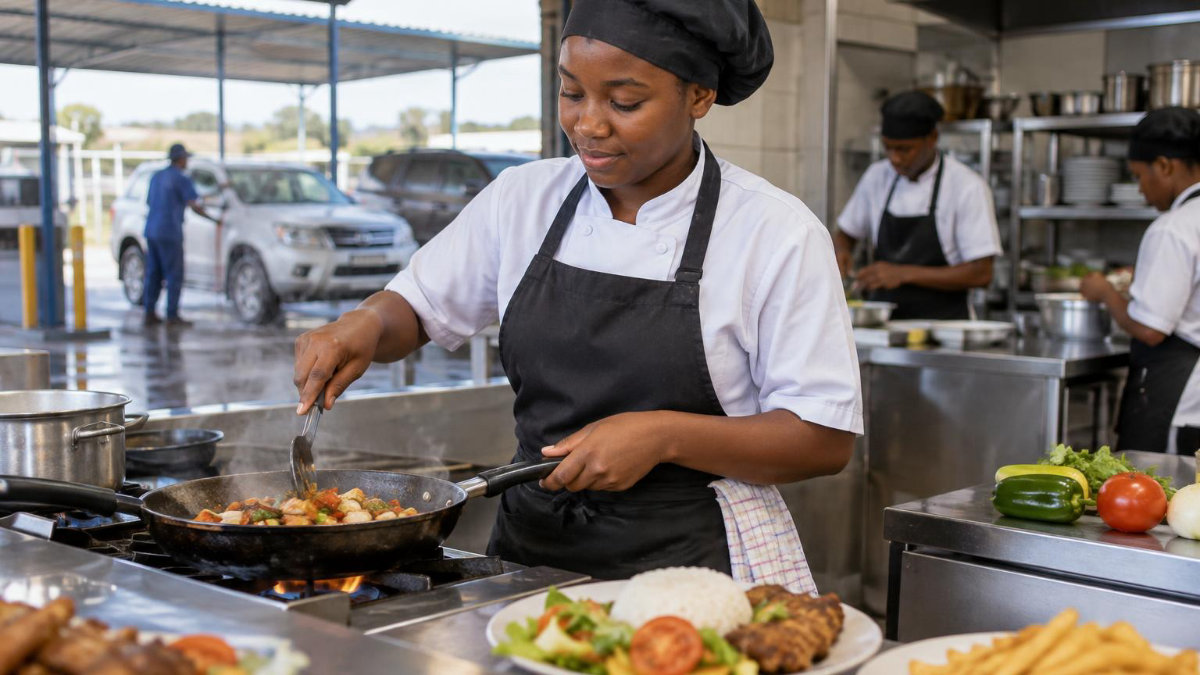
Working in a kitchen attached to a carwash in Ha-Makhuvha is different from working in a quiet suburban café or an institutional canteen. The environment is lively, loud, and directly tied to the flow of customers coming in for vehicle cleaning, socialising, and evening meals. A cook here handles both steady prep work and unpredictable bursts of orders.
An ordinary afternoon shift starts around midday or early afternoon, well before the evening rush. The first hour is spent checking the state of the workspace. You take inventory of refrigerated meats, fresh vegetables, cooking oil, and dry goods. You clean prep tables, sharpen knives, and start your prep list: slicing onions, grating cabbage for salads, portioning cuts of meat, and mixing marinades. In this kind of kitchen, if your prep is late, your entire service falls apart the moment three orders land at once.
By mid-afternoon, the carwash bays are busy and food orders trickle in. You might be frying chips, grilling chicken, or preparing standard sides like pap and chakalaka. Service speed matters. Customers waiting for their cars expect food quickly, while diners sitting down for drinks want hot, consistent plates. You are juggling the heat of gas burners, checking deep fryers, and monitoring cooking times so meat remains juicy rather than dry.
As daylight fades into evening, the pace picks up. Between 18:00 and 21:00, the orders often cluster. A ticket machine or order book fills up, and you must sequence the cooking: start the longest items first, drop the quick fry items at the right moment, and assemble the plates so everything finishes hot together. Because this role requires working late shifts, your work continues past ordinary dinner hours. You manage late-night orders while keeping the kitchen hygienic, wiping down surfaces immediately after spills, and swapping out greasy utensils.
Closing time requires physical stamina. Once the final order is out, you do not just pack up and walk away. You clean grease traps, scrub flat-top grills, wash down prep counters with sanitiser, seal and date leftover ingredients, and sweep and mop the floors. Finally, you write down low stock items on the kitchen chalkboard or notebook so management knows what to buy before the next shift starts.
Advertisement
Who tends to do well in this role
Kitchen work is physical, hot, and repetitive, but it suits people who take genuine pride in producing good food with their own hands. In township and village hospitality venues, successful cooks share specific habits:
- They keep their cool when four tickets arrive at once, rather than panicking or rushing food out half-cooked.
- They have strong physical endurance, standing on tiled floors near hot oil and open flames for seven to nine hours at a time.
- They communicate well with front-of-house staff, letting servers know accurate wait times instead of guessing.
- They treat food safety as a personal standard, constantly washing their hands, rotating stock, and maintaining clean aprons.
- They do not mind late hours, especially over weekends and month-end periods when carwash venues see peak traffic.
If you find satisfaction in a well-organised fridge, sharp knives, and the rhythm of a busy kitchen, this environment will feel energising rather than stressful.
Advertisement
What the employer is really screening for
When a local restaurant advertises for a cook or chef, the hiring manager usually looks past polished resumes and focuses on three core practical factors.
First, they look for proof that you can handle the heat and physical workload without quitting after three busy weekends. Candidates who hold a basic catering certificate from a TVET college, a private cookery school, or a hospitality learnership often catch the eye because they already understand basic culinary terms, knife skills, and food hygiene standards. However, practical catering experience, such as cooking for community functions, working in a shisanyama, or assisting in a local takeaway, often carries equal weight.
Second, they screen for reliability regarding late shifts. Public transport in rural Limpopo thins out after dark. An applicant who has already sorted out safe, reliable transport to and from Ha-Makhuvha late at night is immediately more attractive to an employer than someone who will struggle to stay until close.
Third, small businesses operate on thin margins. The manager will want to know if you can control portion sizes and minimise food waste. A cook who accidentally burns two steaks or over-portions expensive cuts eats directly into the restaurant profit. Showing that you understand cost control and stock care makes you stand out during an interview or kitchen trial.
Where it can lead
Starting as a line cook or chef in an independent venue gives you direct, hands-on control over food that institutional catering rarely offers. You learn the entire cycle: ordering stock, prep, cooking, plating, and customer interaction.
With a year or two of solid performance here, several career paths open up across Limpopo and beyond. You can step into a head cook or kitchen supervisor role, taking responsibility for menu adjustments and training junior kitchen hands.
From there, your experience can support an application to larger hospitality establishments. The northern region of Limpopo has an active safari and lodge industry around the Kruger boundary and Soutpansberg, where safari lodges and boutique guest houses constantly hire line cooks and buffet chefs. Alternatively, mastering the business side of a carwash restaurant provides the exact foundation you need if you plan to launch your own food trailer, catering business, or takeaway eatery down the line.
View the current opportunity
Cook / Chef at LIGAMS Carwash & Restaurant · Ha-Makhuvha
View the listing and applyAdvertisement
Read next
- Aurum Institute is hiring Lay Testers in Mbombela for candidates with Matric and no experienceHow recruitment for public health field roles in Mpumalanga works, what recruiters look for on entry-level CVs, and how to prepare your documents.
- Huntswood lists seasonal US customer service roles for night-shift agents in Cape TownWhat working US night shifts from Cape Town actually feels like hour by hour, what background checks reveal, and how seasonal campaigns open long-term BPO doors.
- Unitrans Durban Checker Vacancy Open for Matric Holders in 2026What the checker role at Unitrans in Durban involves, how to prove you can handle inventory systems without a long CV, and where transport logistics can take you.
- Tsebo hiring Creditors Clerk in Sandton for Grade 12 candidatesAccounts payable is one of the clearest paths into corporate finance without a degree. Here is what the work involves and how to pitch your skills if you have never worked in an office.
More from the FirstJobly Career Hub
Spotted a mistake? Read our editorial and corrections policy.