Afgri is hiring a Sales Clerk in Balfour with Matric and one year of retail experience
Behind the counter at an agricultural branch, the day is split between direct farmer service and relentless inventory control. Here is what the work involves and how to position your retail background.

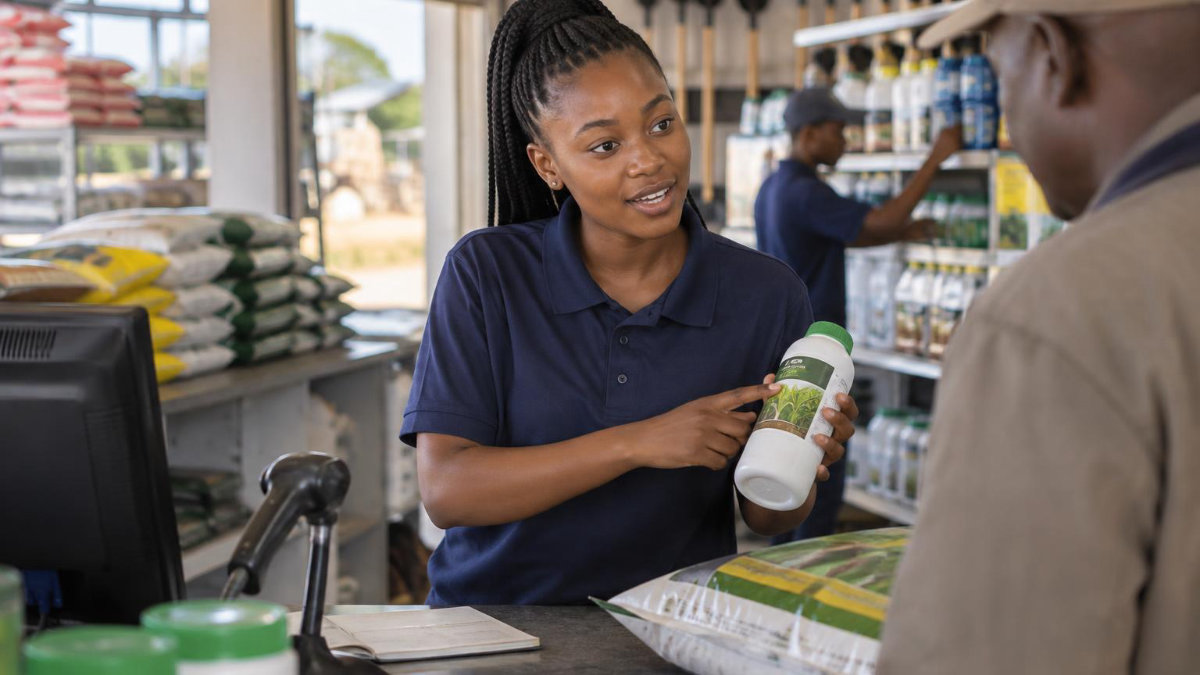
What the work actually looks like
Agricultural retail runs on a different clock to suburban shopping malls. In farming towns like Balfour, branches open early to catch commercial farmers, farm managers, and contractors before their field operations get underway for the day.
At 07:00 or 07:30, your shift begins with basic operational checks. You log into the point-of-sale system, check the float, and pull up backorders or collection slips left over from the previous afternoon. Before foot traffic builds, you walk your assigned aisles to ensure shelves are packed forward, bin cards match shelf stock, and pricing labels are legible.
Between 08:00 and 11:00, counter traffic peaks. Customers come in with specific, practical demands. One farmer needs fencing wire, droppers, and post hole diggers. Another needs dosing remedies for livestock, specific grease cartridges for a tractor, or protective gear for seasonal workers. You search inventory on the computer, check stock availability in the back warehouse or yard, generate invoices, and process card or account payments. When an item is out of stock, you need to suggest compatible alternatives or check when the next distribution truck arrives.
Late morning and early afternoon shift toward goods receiving and inventory maintenance. Suppliers deliver stock ranging from small animal health products to heavy bags of feed and hardware. A sales clerk cannot just wave a delivery driver through. You must:
- Match physical boxes against delivery notes and purchase orders line by line.
- Check packaging for damage or broken seals, particularly on chemicals and veterinary lines.
- Verify unit pricing and barcodes before capturing goods received into the terminal.
- Move stock onto the retail floor or into back storage using correct stacking methods.
Late afternoon is reserved for cycle counts. Stock control in agricultural stores is continuous. You take a clipboard or scanner down specific aisles to count fast-moving items, such as oil filters, seed packets, or tools, cross-checking physical counts against system figures. Before closing, you balance your cash drawer, file customer delivery notes, and report any stock variances to the floor supervisor.
Advertisement
Who tends to do well in this role
This role suits someone who prefers practical, physical retail over standing behind an air-conditioned clothing counter. An agricultural depot combines retail customer service with light warehouse work. You will get dust on your boots, you will lift heavy merchandise, and you will deal with customers who work outdoors and value straight answers.
People who cope well in this environment usually have three traits:
First, they are comfortable with technical product catalogues. Agricultural stores stock thousands of stock keeping units, from plumbing fittings and animal feeds to electrical fencing components. Successful clerks do not guess. If they do not know whether a specific connector fits a pipe, they ask a senior colleague or read the packaging carefully.
Second, they have a natural sense of order. When stock goes missing or prices scan incorrectly at the till, retail margins disappear. Clerks who succeed keep their counters tidy, file delivery notes methodically, and pay close attention to product codes that look almost identical.
Third, they understand rural and agricultural customer service. Farming clients expect reliability. If you promise to put aside six rolls of shade cloth or confirm delivery of a spare part, you need to follow through without being reminded.
Advertisement
What the employer is really screening for
When hiring for a permanent sales clerk vacancy in Mpumalanga, recruiters look past basic customer service buzzwords on a CV. They want evidence of reliability and practical competence.
Because the role asks for at least one year of retail sales experience, shortlisting staff check whether you have handled actual sales transactions and basic computer terminals. Experience in hardware, trade counters, building supplies, or automotive parts carries strong weight here because those sectors handle stock keeping units similar to agricultural supply stores.
Agricultural product knowledge is listed as a requirement, but recruiters know junior applicants may not know every fertiliser formulation or veterinary brand. What they test during interviews is your general familiarity with farming basics and your willingness to learn product categories quickly. If you grew up in a farming district or worked around livestock, equipment, or smallholdings, highlight that context in your application.
Finally, stock accuracy is a major screening factor. Shrinkage from damaged stock, wrong invoicing, and missed delivery discrepancies costs rural branches heavily. In an interview, expect questions about how you handle receiving stock, how you manage stock counts, and what you do when the physical item count does not match the computer screen.
Make sure your certified ID and Matric certificate are clean, clear copies, and that your CV clearly lists the point-of-sale systems or inventory tools you have used.
Where it can lead
Starting as a retail sales clerk in an agricultural supply group gives you a grounded foundation in commercial agribusiness. You see firsthand what farmers buy across planting, growing, and harvesting seasons, and you learn how regional supply chains operate.
Within two to three years of steady performance, internal progression typically leads to senior counter sales, inventory controller, or goods receiving supervisor. From there, staff who show strong numerical and administrative ability often move into branch buying, credit control, or assistant branch management.
Outside of the store itself, the product knowledge you build can open doors to external sales roles. Technical representatives for seed companies, chemical manufacturers, animal feed mills, and fencing suppliers frequently start out behind trade counters where they first learned the products.
View the current opportunity
Sales Clerk at Afgri · Balfour
View the listing and applyAdvertisement
Read next
- Montego Pet Nutrition is hiring a permanent cleaner in Centurion: Matric requiredWhat industrial cleaning roles in food manufacturing actually demand day to day, how factory hygiene works, and where starting on the plant floor can lead.
- The Building Company is hiring a cashier in Mbombela with Matric as the baseline requirement for 2026A cashier role at a building merchant is more practical than standard retail. Here is how to apply without formal till experience and what the job teaches you.
- Montego Pet Nutrition is hiring a General Worker and Driver's Assistant in Durban for 2026This entry-level distribution role requires a Matric certificate and physical stamina, offering school leavers a direct entry point into road freight logistics.
- Overberg Water Board General Worker vacancy in the Western Cape open for Matric holders with Code 08 licenceWhat daily life at a regional water utility actually involves, how public water boards screen applicants, and how an entry-level operational job can lead to a formal trade in water treatment.
More from the FirstJobly Career Hub
Spotted a mistake? Read our editorial and corrections policy.