Overberg Water Board General Worker vacancy in the Western Cape open for Matric holders with Code 08 licence
What daily life at a regional water utility actually involves, how public water boards screen applicants, and how an entry-level operational job can lead to a formal trade in water treatment.

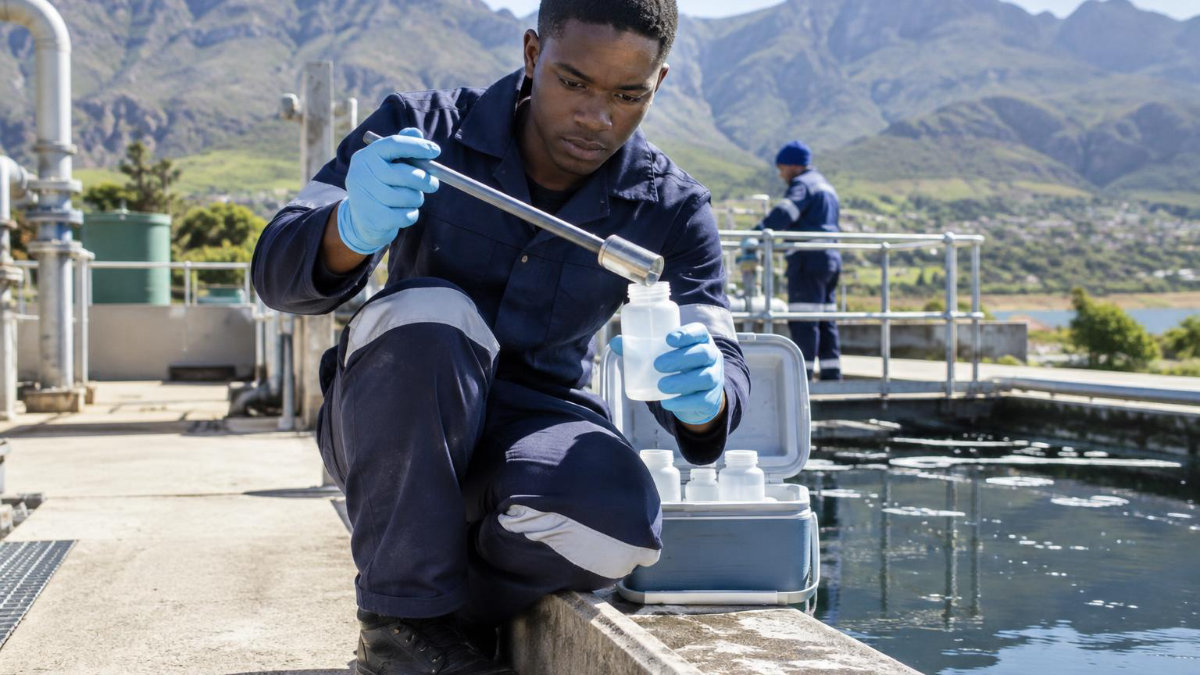
The bulk water sector in the Western Cape
Water boards operate in a quiet, heavily regulated part of South Africa's public sector. Unlike local municipalities, which manage reticulation networks directly to household taps, a regional water utility focuses on bulk infrastructure: capturing raw water, running regional treatment plants, storing millions of litres in reservoirs, and piping water across large rural and semi-rural districts.
In the Overberg region, water distribution covers long distances between small towns, commercial farms, and coastal communities. This geographic reality dictates how a water utility functions day to day. Plants do not stop running at five in the afternoon, and gravity-fed pipelines run across difficult farmland and roadside reserves. Infrastructure is exposed to changing weather, pump failures, and pipe bursts. For the operational teams on the ground, the work environment is outdoors, physical, and subject to 24-hour emergencies. When a bulk main breaks or a reservoir level drops overnight, operations teams must respond immediately to protect the water supply of entire settlements.
Advertisement
Where this role fits in the operations structure
Within a regional water works, a general worker sits at the operational foundation of the plant. Above this level are process controllers, maintenance artisans, technicians, and plant superintendents who manage chemical dosing ratios, water quality compliance, and heavy electro-mechanical equipment. General workers provide the direct physical labour that keeps those complex systems running cleanly and safely.
Daily responsibilities in this kind of post balance routine housekeeping with technical support. On ordinary days, the job involves maintaining plant grounds, clearing brush around perimeter fences to prevent fire risks, cleaning sedimentation tanks, washing filter beds, and moving heavy drums of treatment chemicals. Housekeeping in a water treatment plant is not cosmetic; clear access roads, spotless chemical rooms, and clean sand filters are strict requirements for environmental health and safety audits.
Because regional water boards operate multiple unmanned pump stations, boreholes, and reservoirs scattered across the district, mobility is critical. Holding a valid Code 08 driver's licence means a general worker can be sent out in a utility bakkie to read telemetry gauges, record water meter figures, or transport sample bottles to testing facilities. When major maintenance or burst pipe repairs happen, the general worker assists with digging trenches, isolating valves, carrying heavy pipe fittings, and clearing mud from flooded valve chambers. Standby shifts, weekend cover, and public holiday work are standard parts of the roster because plants require monitoring every single day of the year.
Advertisement
What the sector rewards in candidates
Public water utilities receive large volumes of applications whenever an entry-level vacancy opens. Because these are state-owned entities, human resources departments apply strict compliance checklists before any hiring manager looks at a CV. Knowing what gets an application shortlisted helps early-career job seekers avoid common mistakes.
- Administrative accuracy: Meeting basic criteria like a completed Matric certificate and an active, unendorsed driver's licence is non-negotiable. Missing attachments or unclear copies lead to automatic disqualification during the initial document audit.
- Legible record-keeping: Basic literacy and numeracy are tested directly on the job. Reading analog water meters, recording daily flow volumes on log-sheets, and signing off job cards demand precision. A mistake in a meter reading or sample label creates problems for billing and compliance reporting.
- Dependability under adverse conditions: Hiring panels look for signs that an applicant understands physical work. Working in the rain, digging in muddy trenches during a winter freeze, or handling chemical drums in summer heat requires grit and genuine physical stamina.
- Safety awareness: Water treatment facilities store hazardous chemicals, including chlorine gas and coagulants. Sector employers value candidates who follow instructions to the letter and respect occupational health and safety rules without cutting corners.
Realistic progression from here
Starting as a general worker at a water board gives a young person direct access to specialized municipal infrastructure that very few people outside the industry ever see. It is an honest, physical starting point, but it does not have to remain a manual labour role indefinitely.
In South Africa, the Department of Water and Sanitation regulates the water services industry through formal classifications for Process Controllers (from Class I up to Class V). A general worker with a Matric who shows curiosity and aptitude can learn the mechanics of water treatment directly from senior operators on shift. Many water boards and sector education bodies (such as EWSETA) periodically sponsor internal staff for National Certificates in Water and Wastewater Treatment.
Passing these accredited modules allows an employee to register formally as an assistant process controller, eventually moving away from groundskeeping into monitoring chemical dosages, operating telemetry systems, and running entire treatment plants. Alternatively, working alongside fitters, welders, and electricians during pipeline repairs provides practical exposure to mechanical trades, creating pathways into formal apprenticeships. The ceiling on this role depends entirely on whether a candidate uses their time on plant grounds to study the systems around them.
View the current opportunity
General Worker at Overberg Water Board · Western Cape
View the listing and applyAdvertisement
Read next
- Montego Pet Nutrition is hiring a permanent cleaner in Centurion: Matric requiredWhat industrial cleaning roles in food manufacturing actually demand day to day, how factory hygiene works, and where starting on the plant floor can lead.
- The Building Company is hiring a cashier in Mbombela with Matric as the baseline requirement for 2026A cashier role at a building merchant is more practical than standard retail. Here is how to apply without formal till experience and what the job teaches you.
- Montego Pet Nutrition is hiring a General Worker and Driver's Assistant in Durban for 2026This entry-level distribution role requires a Matric certificate and physical stamina, offering school leavers a direct entry point into road freight logistics.
- Afgri Trainee Parts Salesperson vacancy in Pietermaritzburg opens for matriculants with a licenceHow agricultural equipment dealerships run their parts counters, what trainees actually do on the floor, and where entry-level parts roles lead in South Africa.
More from the FirstJobly Career Hub
Spotted a mistake? Read our editorial and corrections policy.