Montego Pet Nutrition is hiring a permanent cleaner in Centurion: Matric required
What industrial cleaning roles in food manufacturing actually demand day to day, how factory hygiene works, and where starting on the plant floor can lead.

The sector this sits in
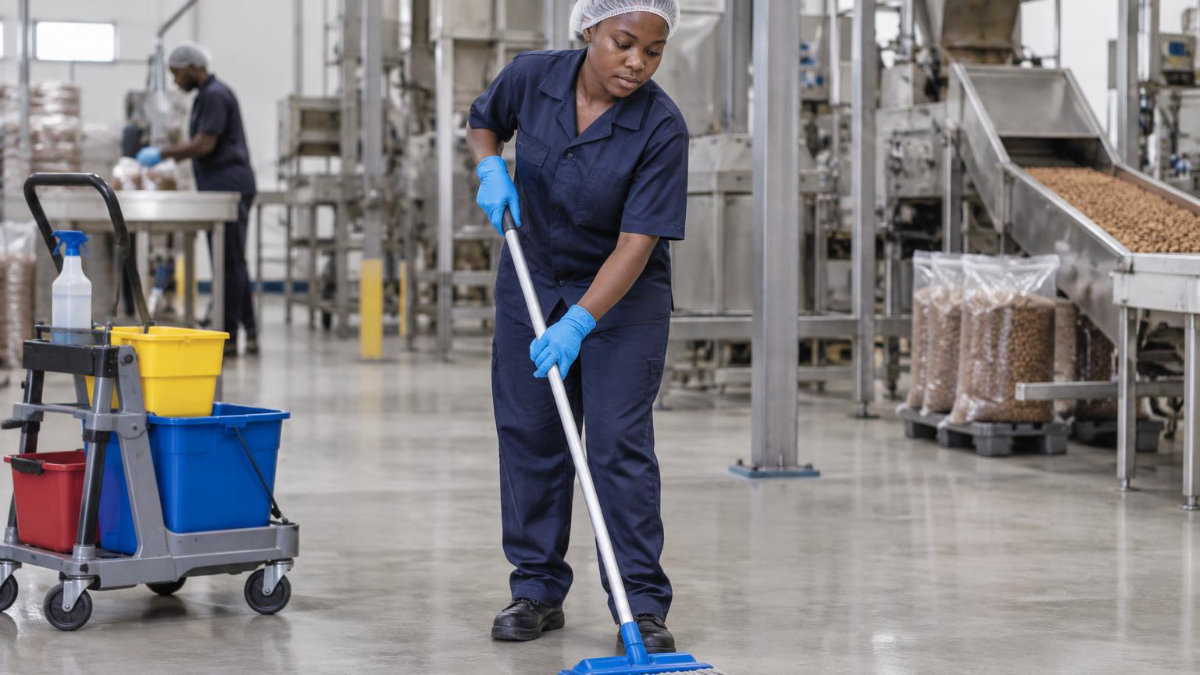
Cleaning an industrial food or animal feed plant is entirely different from cleaning an office block or a retail store. In dry manufacturing and extrusion facilities, dust management and chemical hygiene are matters of legal compliance. Facilities that produce animal feed and pet nutrition operate under strict food safety standards, including hazard analysis regulations and international quality certifications.
In this environment, sanitation is directly tied to the factory's operating licence. Dust from grains and meat meals settles across machinery, conveyors, and overhead structures. If dry dust is left unchecked, it creates safety hazards, pest risks, and contamination points that can spoil entire production runs. Liquid residues, fats, and oils require specific dilution ratios of industrial detergents to lift without corroding machinery or contaminating finished products.
For a first-time applicant or someone looking for entry-level work in Gauteng, this means the environment is noisy, industrial, and regulated. You are not simply tidying rooms. You are executing sanitation cycles that keep an operational plant safe from microbiological hazards and mechanical failure.
Advertisement
Where this role fits in the structure
Industrial cleaning staff report either to a hygiene supervisor or directly into plant maintenance and production management. The cleaning team operates alongside line operators, warehouse staff, and mechanical technicians.
When a production line pauses or finishes a batch, cleaners step in to clear residues before the next formulation begins. During scheduled maintenance shutdowns, the hygiene team performs deep cleans, scrubbing inside hoppers, dismantling ducting covers, and washing down hard-to-reach machine parts.
Daily routines in a manufacturing plant usually divide into two distinct scopes:
- Production floor cleaning: Scraping, vacuuming, and wiping down packaging lines, mixing platforms, and raw material intake points using designated colour-coded equipment to prevent cross-contamination between raw and finished zones.
- Facility sanitation: Disinfecting ablution blocks, locker rooms, walkways, and administrative offices, as well as keeping chemical stores organised and restocked.
This is physically demanding work. Cleaners spend eight hours or more on their feet, moving between hot processing bays and cold storage areas. Personal protective equipment, including gumboots, dust masks, earplugs, and hairnets, is mandatory on the plant floor. Shift work is standard in manufacturing, which means starting early in the morning or working weekends when the plant undergoes complete system washes.
Advertisement
What the sector rewards in candidates
In entry-level factory roles, hiring managers rarely expect years of specialised technical experience. Instead, they look for specific behavioral traits that predict whether an applicant can survive the environment without creating safety risks.
First, manufacturing employers reward consistency and rule-following. A food plant relies on Standard Operating Procedures (SOPs). If a surface requires a ten-minute contact time with a sanitiser diluted at a specific ratio, shortening that process creates a biological hazard. Managers value candidates who read instructions, complete daily checklists accurately, and never take shortcuts with chemical mixing.
Second, physical stamina and environmental tolerance matter. Food processing plants contain fine dusts, steam, and cleaning vapour. An individual with unmanaged respiratory allergies or skin sensitivities will struggle quickly. Hiring teams look for candidates who understand that the job involves heavy buckets, high-pressure hoses, and continuous physical movement.
Third, basic communication and honesty are critical. If a chemical spill occurs or a piece of cleaning equipment breaks inside a production zone, management needs workers who report it immediately rather than hiding it. Reliability with shift attendance is non-negotiable; if the cleaning crew does not arrive on time, the production line cannot legally start running.
Realistic progression from here
Starting as a cleaner is one of the most common foot-in-the-door routes into South African manufacturing. Many factory supervisors and machine operators began their careers on cleaning and general worker shifts.
Because cleaners move across all areas of a plant, they learn the factory layout faster than almost anyone else. A cleaner observes how operators feed material into machines, how packers handle palletising, and where maintenance teams focus their repairs.
Progression usually follows a few practical routes for workers who prove their work ethic:
- Hygiene team leadership: Moving from general cleaning into a senior cleaner or hygiene supervisor role, which involves managing cleaning rotas, chemical stock control, and hygiene audit logs.
- Machine operation: Moving onto the packaging or processing line as a line assistant or junior machine operator. Plants frequently hire internally for operational vacancies before advertising outside.
- Warehousing and logistics: Transitioning into material handling, receiving, or forklift operation after obtaining relevant internal clearances or driving licences.
- Quality assurance: Cleaners with good attention to detail and strong paperwork habits sometimes move into entry-level quality control roles, helping technicians take samples and monitor hygiene swab tests.
The progression is not automatic. It requires a clean disciplinary record, punctual shift attendance, and actively asking line supervisors to teach you how the equipment works during downtime.
View the current opportunity
Cleaner at Montego Pet Nutrition · Centurion
View the listing and applyAdvertisement
Read next
- The Building Company is hiring a cashier in Mbombela with Matric as the baseline requirement for 2026A cashier role at a building merchant is more practical than standard retail. Here is how to apply without formal till experience and what the job teaches you.
- Montego Pet Nutrition is hiring a General Worker and Driver's Assistant in Durban for 2026This entry-level distribution role requires a Matric certificate and physical stamina, offering school leavers a direct entry point into road freight logistics.
- Overberg Water Board General Worker vacancy in the Western Cape open for Matric holders with Code 08 licenceWhat daily life at a regional water utility actually involves, how public water boards screen applicants, and how an entry-level operational job can lead to a formal trade in water treatment.
- Afgri Trainee Parts Salesperson vacancy in Pietermaritzburg opens for matriculants with a licenceHow agricultural equipment dealerships run their parts counters, what trainees actually do on the floor, and where entry-level parts roles lead in South Africa.
More from the FirstJobly Career Hub
Spotted a mistake? Read our editorial and corrections policy.