Eskom opens three-year electrical apprenticeship across North West with no work experience needed
How to approach the Eskom electrical apprentice intake across five North West towns when your CV has technical subjects but zero formal work history.

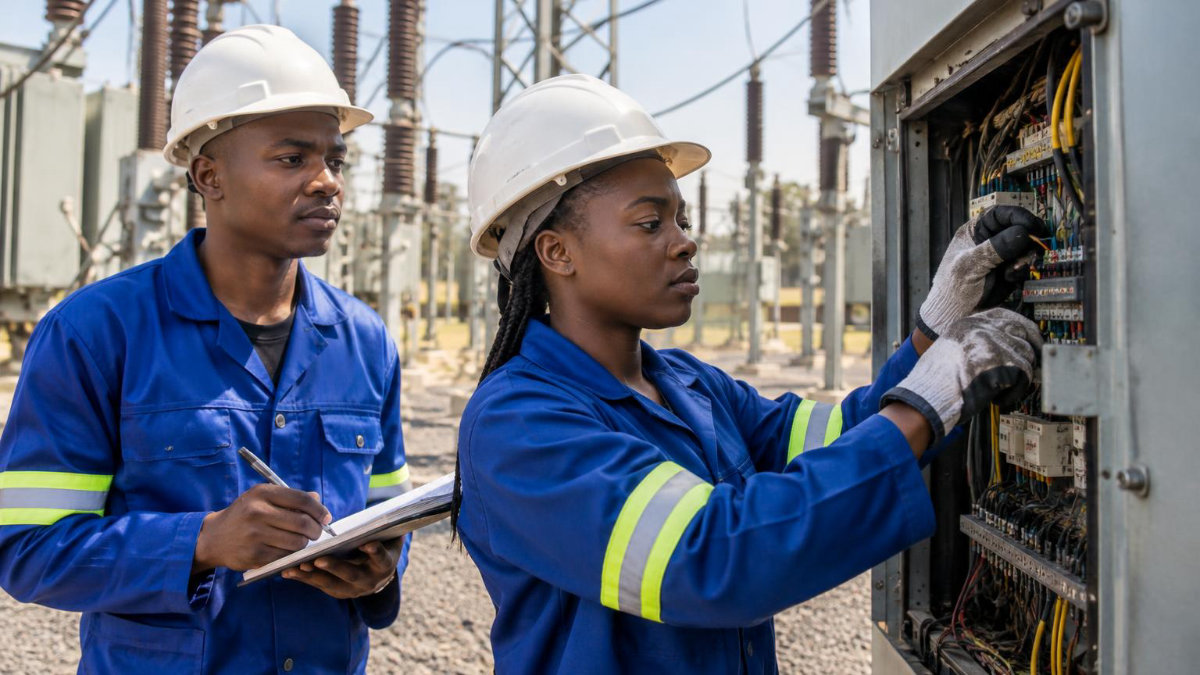
Why this is a realistic first job
Many entry-level vacancies in South Africa ask for experience that school leavers and TVET college graduates simply cannot have. An apprenticeship is fundamentally different. It is designed around the assumption that you know the theory from your textbooks but have never held tools in a live industrial environment.
Eskom's electrical apprentice intake across North West towns such as Potchefstroom, Klerksdorp, Rustenburg, Mmabatho, and Taung targets candidates who have their N2 or N3 certificates or a technical matric, but no formal track record on site. You do not need connections or a previous employer's reference to qualify for shortlisting. Your gateway is your academic record in mathematics, physical science, and electrical theory.
State utility apprenticeships remain one of the most reliable entry routes into heavy industry because the employer carries the full cost of turning an unqualified school leaver into an artisan. The three-year contract gives you time to grow into the work. You are not expected to deliver commercial output on day one. You are hired to learn under close supervision, which removes the immediate pressure that usually makes a first job overwhelming.
Advertisement
What you will learn in the first months
The gap between TVET college classrooms and a live distribution network is wide. In college, wiring diagrams exist on paper or on small training boards with controlled voltages. In your first months on site, reality looks very different.
Your earliest training focuses on personal safety and hazard identification before anyone lets you near live equipment. Power distribution carries lethal risks, so learning how to step onto a site, read isolation permits, test for dead circuits, and use personal protective equipment correctly comes before actual technical repairs.
You will spend significant time learning how an operating depot runs day to day. In general terms, early apprentice training in electrical distribution covers:
- Identifying specialised tools, high-voltage test gear, and switchgear components by their correct industry names
- Understanding occupational health and safety regulations, including standard lock-out and tag-out procedures
- Reading schematic diagrams for substations and local distribution networks rather than domestic household boards
- Hand tool maintenance, proper cable jointing techniques, and basic wiring inspections
- Logging work hours and completed competencies in your official training logbook for your eventual trade test registration
Expect the work to be physical and weather-dependent. You will spend hours outside in the North West heat, standing on concrete, carrying heavy cable drums, and assisting qualified artisans with routine maintenance. You will also do clerical work: writing down fault logs, counting store stock, and completing safety checklists.
Advertisement
Applying with little or no experience
When you apply for an electrical vacancy through an online recruitment portal with zero work history, your school and college documents have to do all the heavy lifting. Screening software looks first for subject combinations and minimum pass marks.
Make sure your uploaded academic records are complete, clear, and legible. If you hold an N2 alongside your standard matric certificate, upload both. Ensure your mathematics and physical science percentages match the portal entries exactly. Discrepancies between what you type into an online form and what is stamped on your statement of results will cause automated rejection.
Your CV should stay short, clean, and factual. A two-page document is enough. Because you lack full-time employment references, focus on what you actually did during your studies. List every electrical module you passed. If you completed practical workshop weeks at a TVET college, write out the specific tasks you performed, such as conduit bending, single-phase motor testing, or using multimeters.
Address the personal attributes directly in your summary. Safety awareness is not just a buzzword in high-voltage work; it is a legal requirement. In your motivation or profile paragraph, point out that you follow instructions accurately, keep tidy workstations, and respect dangerous equipment. If you held minor responsibilities at school, in church, or in community projects, include them briefly to show reliability, timekeeping, and self-discipline.
Turning it into a career, not just an income
A three-year apprenticeship is not an ordinary job contract. Its true value is the Trade Test certificate at the end of the programme. In South Africa, passing your Red Seal trade test transforms you legally from an assistant into a qualified artisan electrician.
That distinction changes your working life permanently. An uncertified labourer competes with millions of job seekers for minimum-wage work. A qualified artisan electrician with three years of utility or heavy-current experience holds a scarce skill recognised across mining houses, construction firms, manufacturing plants, and municipalities throughout Southern Africa.
While you are on the programme, treat your logbook as your most valuable asset. Do not allow tasks you completed on site to go unsigned by your mentor. If you spend a month working on transformers or switchgear, ensure the artisan details the hours and signs the relevant page immediately. Gaps in your logbook will delay your clearance to write your trade test through the relevant SETA or the National Artisan Moderation Body.
Even if permanent retention at your host employer is never guaranteed at the end of three years, completing an apprenticeship with a national power utility gives your CV credibility that few private contractors can match. The discipline you learn on grid infrastructure sets the foundation for supervisory work, maintenance management, or starting your own contracting business down the line.
View the current opportunity
Electrical Apprentice at Eskom Holdings SOC Ltd · Potchefstroom, Taung, Mmabatho, Rustenburg, Klerksdorp
View the listing and applyAdvertisement
Read next
- Vision Elevators Opens Cape Town Lift Technician Trainee Programme for N6 CandidatesA breakdown of what a four-year lift apprenticeship in Cape Town involves, how technical testing works, and where the trade leads.
- Sasol Millwright Apprenticeship 2026: Train as an Electro-Mechanic in Secunda and SasolburgA trade apprenticeship for matriculants and N3 holders who want a qualified artisan trade. Here is who qualifies, what the training covers and how selection works.
- MAN Automotive Apprentice Diesel Mechanic Learnership in Bloemfontein Closes September 2026MAN Automotive is accepting applications for an Apprentice Diesel Mechanic Learnership based in Bloemfontein. Trainees will gain practical experience in heavy commercial vehicle maintenance under qualified mentors.
- City of Johannesburg opens food value chain internship paying R10,109 a month for 2026What the City of Johannesburg looks for in food value chain intern applications, how municipal shortlisting works, and how to prepare your paperwork.
More from the FirstJobly Career Hub
Spotted a mistake? Read our editorial and corrections policy.