SGS opens Junior Agronomist vacancy in Potchefstroom for agriculture graduates
What commercial agricultural testing actually involves in South Africa, how technical field roles operate across provinces, and where a precision farming foundation leads.

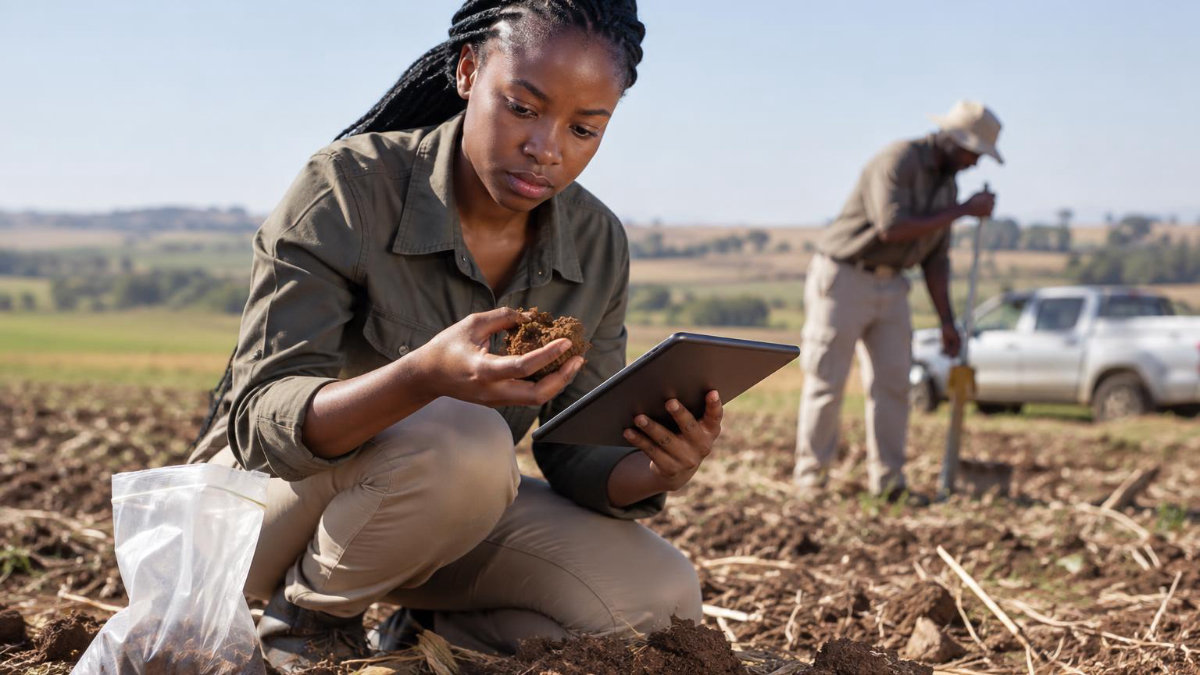
The agricultural testing and precision farming sector
Commercial agriculture in South Africa operates on tight margins, volatile weather, and expensive inputs. When a grain farmer in the North West or a citrus producer in Limpopo spends millions of rands on fertiliser, seed, and lime, they cannot afford to guess soil fertility. They need verifiable, independent scientific data.
This is where testing, inspection, and certification companies sit. An enterprise like SGS does not cultivate crops or run commercial herds. Instead, it operates as an independent technical partner to producers, chemical suppliers, grain traders, and financial institutions. In the agricultural division, the focus is largely on soil chemistry, plant tissue analysis, water testing, and precision farming services.
Over the past decade, South African farming has shifted decisively toward precision agriculture. Fields are no longer treated as uniform blocks of land. Using satellite imagery, yield monitors, and grid soil sampling, agronomists map out specific zones of nutrient deficiency, acidity, or compaction. By generating variable-rate prescription maps, service providers help farmers apply inputs only where needed. For an entry-level candidate entering the market in 2026, joining this corner of the industry means working where laboratory chemistry, field mechanics, and spatial software intersect.
Advertisement
Where a junior agronomist fits in the operational structure
In an agricultural services firm, the junior agronomist is the operational engine that links the farmer's paddock to the analytical laboratory. Senior agronomists and commercial account managers spend much of their time negotiating contracts, presenting broad strategies to farming cooperatives, and managing key accounts. The junior role handles the ground truth.
Operating from a hub like Potchefstroom, the day-to-day workflow covers three main phases:
- Field collection and sampling planning: Identifying GPS sampling points on farm boundary maps, coordinating with landowners, and ensuring soil cores or leaf samples are gathered systematically without contamination.
- Data processing and interpretation: Once the laboratory runs the assays, the junior agronomist reviews chemical readings such as pH levels, cation exchange capacity, and phosphorus reserves, then cleans raw field data using spatial mapping tools.
- Report writing: Translating technical laboratory printouts into structured, readable reports that make practical sense to farm managers and agronomists on the ground.
While based in Potchefstroom, supporting operations across Mpumalanga and Limpopo introduces significant travel into the job. A junior agronomist routinely spends hours on rural roads, stays in small agricultural towns during intensive planting and sampling seasons, and adapts to wildly different soil types and cropping systems. You might evaluate sandy loam soils in the western maize belt one week and deep clay soils under subtropical fruit the next.
Advertisement
What the agricultural services sector rewards in candidates
Academic credentials get your CV onto the shortlist, but they do not make you successful in the bakkie or at the farm gate. Commercial agriculture in South Africa has a distinct culture that values technical competence paired with practical, unpretentious communication.
First, language and cultural fluency matter. In regions like the North West, Mpumalanga, and Limpopo, commercial crop production is heavily Afrikaans-speaking. Being able to explain complex soil chemistry, exchangeable sodium percentages, and variable-rate applications fluently in both Afrikaans and English is an operational requirement, not just a line on a job spec. Farmers trust advisors who understand their terminology and communicate without academic jargon.
Second, the sector prioritises candidates who treat data with precision. A misplaced decimal point on a soil recommendation report can cause a farmer to over-fertilise a land parcel or scorch an emerging crop. Employers screen for graduates who are comfortable working in Microsoft Excel, handling large spreadsheets of GPS coordinates, and learning specialised Geographic Information Systems (GIS) software.
Finally, physical and mental stamina define who stays in the field. Soil sampling runs on tight seasonal windows between harvest and planting. When winter arrives and the combines finish running, agronomists must sample thousands of hectares before pre-plant fertiliser programmes begin. Candidates who adapt well to long drives, early mornings in the dust, and fast report turnarounds build strong reputations quickly.
Realistic progression from an entry-level agronomy role
Taking up a junior agronomist role gives an agricultural graduate immediate credibility because it proves you have done real field work and handled actual laboratory data. It is rare for an agronomist to stay in a junior testing role for more than two to three years before moving into specialized tracks.
One common path is moving into commercial technical sales. Chemical, seed, and fertiliser multinationals (including distributors, blenders, and input houses) constantly recruit agronomists who understand soil science to advise farmers on their product lines. These positions often carry commercial targets, performance bonuses, and direct advisory responsibilities.
Another path leads toward precision farming consultation and spatial data analysis. Agronomists who master remote sensing, drone mapping, and yield data analytics can transition into dedicated digital agriculture consultancies or manage precision programmes for large corporate farming enterprises.
Longer-term career security in South Africa often involves registering as a Certificated or Professional Natural Scientist with SACNASP (the South African Council for Natural Scientific Professions). Building verifiable field experience, learning how commercial laboratories operate, and compiling professional agricultural reports provide the exact paper trail required for full professional registration down the line.
View the current opportunity
Junior Agronomist at SGS · Potchefstroom
View the listing and applyAdvertisement
Read next
- Pick n Pay is hiring a deli assistant in Sandton with no experience required for 2026What the Pick n Pay On Nicol deli role demands in practice, which requirements are strict, and how to position your application without prior counter experience.
- Sentraal-Suid Co-operative Ltd Cashier Vacancy in Kareedouw: Matric Only, No Experience Needed (2026)Sentraal-Suid Co-operative is hiring a permanent cashier in Kareedouw with no prior work history required. Here is what working in agricultural retail actually involves and how to apply with a clean Matric.
- Afgri is hiring a Sales Clerk in Balfour with Matric and one year of retail experienceBehind the counter at an agricultural branch, the day is split between direct farmer service and relentless inventory control. Here is what the work involves and how to position your retail background.
- Montego Pet Nutrition is hiring a permanent cleaner in Centurion: Matric requiredWhat industrial cleaning roles in food manufacturing actually demand day to day, how factory hygiene works, and where starting on the plant floor can lead.
More from the FirstJobly Career Hub
Spotted a mistake? Read our editorial and corrections policy.